
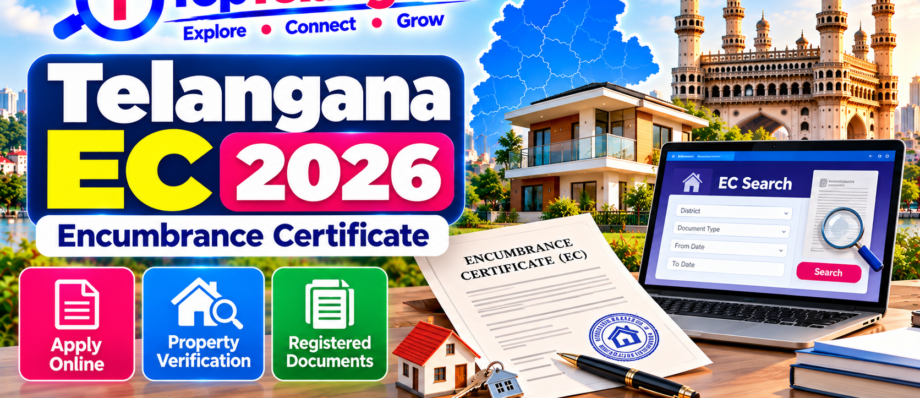
Telangana EC 2026: Encumbrance Certificate Online, Status & Property Verification Guide
- October 7, 2026
- Land & Property, Telangana Encumbrance Certificate
- 9 mins read
Telangana EC 2026: Encumbrance Certificate Online, Status & Property Verification Guide
Buying a house, flat, plot or land in Telangana is a major financial decision. Before completing a property transaction, buyers should check the available registration and property records carefully.
One important document used for this purpose is the Encumbrance Certificate (EC).
The Telangana State Portal currently lists “Apply online for Encumbrance Certificate” as a service of the Registration & Stamps Department. The Telangana MeeSeva services page also lists Encumbrance Certificate under Registration services.
This guide explains Telangana EC 2026, what an EC is, why it matters, how EC search works, where to apply, what to check and what an EC does—and does not—tell you.
What Is an Encumbrance Certificate (EC)?
An Encumbrance Certificate, commonly called an EC, is a registration-related document used to identify registered transactions or encumbrances recorded against a property for the period covered by the search.
Depending on the property and records available, an EC search can help identify registered transactions such as:
- Sale transactions
- Mortgages
- Gifts
- Leases
- Releases
- Other registered transactions appearing in the relevant records
The Registration & Stamps Department maintains registered-document information and provides records and copies that can help the public verify property-related information.
Why Is EC Important When Buying Property?
An EC is an important part of property due diligence.
Before purchasing property, buyers can use the available EC information to check whether registered transactions or encumbrances appear in the searched period.
It can be particularly useful when:
- Buying a house
- Buying an apartment
- Buying a residential plot
- Buying agricultural land
- Applying for a property loan
- Checking historical registered transactions
- Verifying property documentation
- Reviewing a seller’s documents
However, an EC should not be treated as the only proof of ownership or a complete title-clearance certificate.
Property buyers should also examine title documents, land records, registration records, prohibited-property status where applicable, tax records and other relevant documents.
Telangana EC 2026: Where Can You Apply?
The Telangana State Portal lists the online Encumbrance Certificate service under the Registration & Stamps Department.
The Telangana MeeSeva service directory also lists Encumbrance Certificate under Registration services.
Official Telangana services
Telangana State Portal – EC Service:
Apply for Encumbrance Certificate through Telangana State Services
Telangana MeeSeva:
Telangana MeeSeva Portal
Bhu Bharati and EC Services
Telangana’s current Bhu Bharati portal provides several property and registration-related functions.
Its information section includes:
- Encumbrance Fetch (EC)
- Registered Document Details
- Certified Copy of Document
- Registration Charges Calculator
- GPA Fetch
- Prohibited Survey Number
- Pre-registration
- Sale Deed
- Mortgage
- Gift
- Lease
- Release Deed
Official Bhu Bharati portal:
Bhu Bharati Telangana
The Bhu Bharati portal also provides a registration charges calculator covering stamp duties, registration fees and user charges.
What Information Should You Check Before Applying for EC?
Before starting an EC search or application, keep the property information available.
Depending on the service and property, relevant information may include:
- District
- Mandal
- Village/locality
- Property details
- Survey number, where applicable
- Sub-division number, where applicable
- Document details
- Registration information
- Search period
The exact information required can vary depending on the property and service being used.
How to Apply for Telangana EC Online
A typical online process involves the following steps.
Step 1: Open the official Telangana service portal
Use the Telangana State Portal or the official service linked through the Registration & Stamps Department.
Step 2: Select Encumbrance Certificate
Choose the EC/Encumbrance Certificate service.
Step 3: Enter property details
Provide the information requested by the official application interface.
Make sure the property details are entered carefully.
Step 4: Select the required search period
Choose the relevant period for which the EC information is required.
Step 5: Submit the application
Review all information before submitting.
Step 6: Pay the applicable charges
If the service requires payment, complete the payment through the official system.
Step 7: Track the application
Keep the application/reference details safely so that you can check the status.
Step 8: Obtain the EC
After processing, access the certificate/document through the available official process.
Important: The actual interface, fees and workflow can change. Always follow the current instructions displayed on the official Telangana portal.
How to Check EC Status in Telangana
If you have submitted an EC application online, retain:
- Application number
- Transaction/reference number
- Payment details
- Date of application
- Property information
Use the official portal’s available tracking or application-status facility rather than relying on unofficial websites.
What Does an EC Show?
An EC can provide information about registered transactions/encumbrances appearing in the relevant registration records for the searched period.
For example, depending on the records, it may help reveal whether a registered transaction such as a mortgage or sale appears in the searched period.
This makes EC particularly useful during property due diligence.
What an EC Does NOT Prove
This is one of the most important points for property buyers.
An EC should not be considered a complete guarantee that a property has clear and undisputed title.
An EC is not a substitute for:
- Title verification
- Parent/link documents
- Land-record verification
- Survey verification
- Seller identity verification
- Court-case checks
- Prohibited-property checks
- Layout approval verification
- Building permission verification
- Tax verification
- Legal due diligence
The Telangana Registration & Stamps Department explains that registration records provide recorded information that enables the public to verify records and enquire about rights, title and obligations concerning immovable property.
EC vs Property Title Verification
These two concepts are related but different.
| EC | Title Verification |
|---|---|
| Checks registered transactions/encumbrances in the relevant records | Examines the overall legal ownership chain |
| Based on the searched period and available registration records | Reviews multiple documents and records |
| Useful for property due diligence | More comprehensive legal examination |
| Can reveal registered transactions | Examines ownership, title defects and other legal issues |
| Should not be used alone | Usually requires professional/legal review for significant transactions |
For expensive property transactions, consider getting the documents examined by a qualified property lawyer.
EC Before Buying a Plot
If you are purchasing a plot in Telangana, consider checking the EC along with other important records.
A practical due-diligence checklist can include:
- EC
- Sale deed
- Parent/link documents
- Land records
- Survey number
- Property boundaries
- Prohibited-property status
- Layout approval
- Land-use information
- Property tax information where applicable
- Seller’s identity and ownership documents
- Court/litigation information where relevant
Do not rely on a single certificate.
EC Before Buying a House
For an independent house, buyers should examine both the land and the structure.
Important checks may include:
- Land title
- Sale deed
- EC
- Land records
- Property tax
- Building permission
- Approved plan
- Occupancy-related documents where applicable
- Seller’s ownership documents
- Encumbrances and litigation
The required documents can differ depending on the property’s location, age and type.
EC for Apartments and Flats
For an apartment purchase, EC is only one part of due diligence.
Buyers may also need to examine:
- Sale agreement
- Sale deed
- Parent documents
- Builder’s title documents
- Project approvals
- Building permissions
- Occupancy-related documentation
- Undivided share of land
- Property tax
- Association-related information
- Loan/mortgage information
- RERA information where applicable
For a large financial transaction, professional verification is strongly recommended.
Telangana EC and Bhu Bharati Property Verification
Bhu Bharati provides several tools related to property registration and verification, including Encumbrance Fetch (EC), registered document details, certified document copies and prohibited survey-number information.
This means property buyers should not look at EC in isolation.
A better approach is to cross-check information across the relevant official property and registration records.
Important Checks Before Property Registration
Before paying a substantial advance for property, consider checking:
1. Seller ownership
Confirm that the person selling the property has the right to sell it.
2. EC
Check registered transactions/encumbrances for the relevant period.
3. Land records
Check the applicable land records and property details.
4. Survey number
Verify the survey/subdivision information wherever applicable.
5. Prohibited property
Check whether the property appears in relevant prohibited-property records.
6. Registered documents
Review the available registered documents and link documents.
7. Approvals
For plots, houses and apartments, verify applicable approvals.
8. Legal verification
For significant purchases, obtain professional legal advice.
Is Telangana EC Available Online?
Yes. The Telangana State Portal currently lists Apply online for Encumbrance Certificate as a Registration & Stamps Department service.
The official Bhu Bharati portal also includes Encumbrance Fetch (EC) among its property/registration functions.
Always use the current official portal rather than third-party websites claiming to issue government ECs.
Telangana EC Fees
EC-related charges can depend on the applicable service and current government fee structure.
Because government fees and service procedures can change, users should verify the current amount displayed on the official Telangana service portal before making payment.
Avoid relying on old fee information published on random websites.
Common Mistakes While Checking EC
Mistake 1: Checking only a recent period
A short search period may not provide the historical information you need.
Mistake 2: Entering incorrect property details
Incorrect survey, document or property information can produce misleading results.
Mistake 3: Treating EC as complete title proof
EC is an important document, but it is not a substitute for comprehensive title verification.
Mistake 4: Ignoring prohibited-property checks
Property buyers should perform all relevant checks before proceeding.
Mistake 5: Not checking original documents
Digital records should be cross-checked with the seller’s original documentation.
Mistake 6: Paying an advance before verification
Avoid making major financial commitments before completing appropriate due diligence.
Telangana EC 2026: Quick Checklist
Before buying property, keep this checklist:
☑ Check Encumbrance Certificate
☑ Verify registered documents
☑ Check ownership/title
☑ Verify survey/subdivision details
☑ Check applicable land records
☑ Check prohibited-property status
☑ Verify property approvals
☑ Check tax-related records where applicable
☑ Verify seller identity
☑ Check for potential litigation
☑ Get legal verification for major transactions
Official Telangana EC & Property Resources
Telangana State Services:
Telangana State Services – Encumbrance Certificate
MeeSeva:
Official Telangana MeeSeva Portal
Bhu Bharati:
Official Bhu Bharati Telangana Portal
Registration & Stamps Department:
Telangana Registration & Stamps Department
The Telangana State Portal identifies the Registration & Stamps Department as the department responsible for registered-document records and related public verification services.
Frequently Asked Questions
What is EC in Telangana?
EC stands for Encumbrance Certificate. It is used to identify registered transactions or encumbrances appearing in the relevant property registration records for the searched period.
Can I apply for Telangana EC online?
Yes. Telangana’s State Portal currently lists an online Encumbrance Certificate service under the Registration & Stamps Department.
Is EC proof of property ownership?
No. EC should not be treated as complete proof of ownership or clear title. Comprehensive property due diligence may require several additional documents and checks.
Is EC required before buying property?
It is an important property due-diligence document, although the exact documents required can vary depending on the property and transaction.
Can EC show a mortgage?
A registered mortgage or other registered encumbrance may appear in the relevant registration records covered by the search.
Can I check EC through Bhu Bharati?
The Bhu Bharati portal currently provides an Encumbrance Fetch (EC) function among its registration-related services.
Should I take a lawyer’s opinion before buying property?
For a significant property purchase, professional legal verification is advisable, particularly when ownership history, land classification, documents or other legal issues are unclear.
Final Takeaway
Telangana EC 2026 is an important part of property due diligence. It can help buyers review registered transactions and encumbrances associated with a property during the relevant search period.
However, EC alone is not enough to establish clear title.
For safer property transactions, combine EC verification with ownership/title documents, land records, registered documents, applicable approvals, prohibited-property checks and professional legal verification.
Use the official Telangana State Portal, MeeSeva and Bhu Bharati services for current information rather than relying on outdated third-party websites